



The One Free Sunday Habit That Could Transform Your Kids
The One Free Sunday Habit That Could Transform Your Kids
If someone told you there was one simple, completely free activity you could do every Sunday that would make your children happier, healthier, smarter, and more connected to you, you might assume it was a sales pitch. But the evidence is overwhelming: take your kids to church regularly. You don’t even have to believe. The data is so one-sided that skipping it is the parenting equivalent of refusing vegetables because you don’t like the taste.
Better Grades and Academic Success
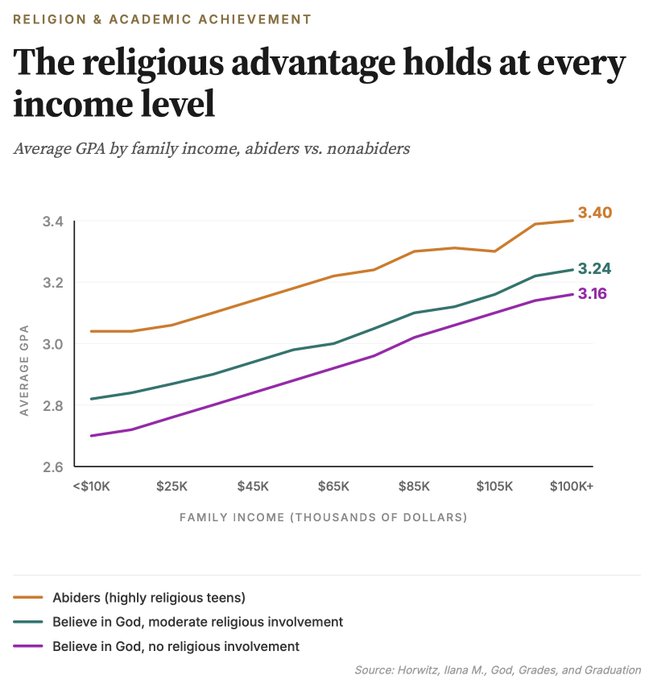
Religious teens earn A grades at nearly twice the rate of their nonreligious peers. In a class of 100 students, that means roughly 24 straight-A students instead of 14. The academic advantage is comparable to the boost a child receives simply by being born into a wealthy family rather than a poor one. Church attendance provides structure, accountability, and a network that supports learning.
Higher College Completion Rates
For working-class families, religious kids earn bachelor’s degrees at double the rate of their nonreligious counterparts. Even in middle-class families, the rate is 1.5 times higher. For parents without a trust fund or elite connections, regular churchgoing stands out as one of the most powerful drivers of upward mobility that social scientists have identified.
Stronger Character and Ethics
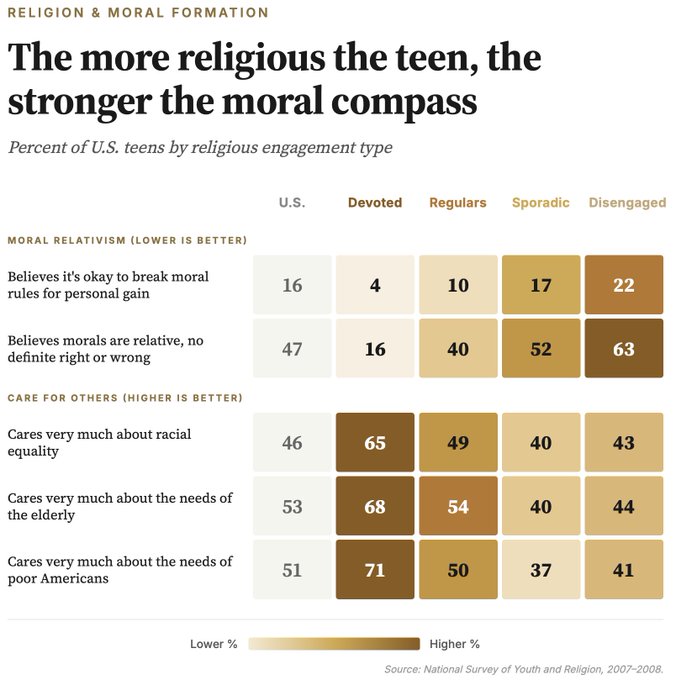
Religious teens are significantly less likely to lie, cheat, or engage in hidden behaviors they know would disappoint their parents. They show greater concern for racial equality, care for the elderly, and compassion for the poor. Rather than viewing morality as “whatever feels right in the moment,” they tend to embrace a more stable ethical framework. This kind of character isn’t accidental — it’s cultivated through consistent exposure to moral teaching and community expectations.
Deeper Family Closeness
Sixty percent of parents with religious teens describe feeling “extremely close” to their children, compared to 50 percent of nonreligious parents. The teens themselves report the same. Families who attend church together communicate better about difficult topics and genuinely enjoy spending time with one another.
Protection Against Mental Health Struggles
Religious teens experience dramatically lower rates of depression, anxiety, loneliness, and feelings of meaninglessness. Ninety percent of highly religious teens never binge drink, versus just 41 percent of disengaged teens. As economists have labeled today’s crisis “deaths of despair,” regular church attendance emerges as one of the strongest protective factors available. While parents invest thousands in therapy and interventions, this evidence-backed solution costs nothing.
Greater Purpose and Resilience
Young adults who grew up attending church consistently report higher levels of purpose, gratitude, life satisfaction, and resilience — precisely the qualities most parents say they want for their children.
Why Church Works So Well
Affluent families can surround their kids with networks of stable, successful adults through neighborhoods, schools, and professional circles. For working- and middle-class families, those networks are often absent. A local congregation frequently serves as the last major American institution that reliably places children in weekly contact with dozens of employed, sober, responsible adults who know their names. It recreates what used to be called “a village.”
Addressing Common Objections
“But I don’t believe.” Your children don’t need your theology. They need you to show up and invest the time. The benefits flow from the practice and community, not from perfect personal faith.
“But church is boring.” So is sitting through a kindergarten music recital or driving to endless sports practices. Parenting often means choosing to be bored on purpose for the sake of someone you love.
Churches are remarkably accessible. There is one within 15 minutes of nearly every American home. No money, credentials, or connections are required — just walking through the doors. Nothing else in modern life offers such a complete package of engaged adults, moral seriousness, and stable weekly rhythm at zero cost.
You already drive your kids to activities that deliver far less return. The free Sunday option produces broader, deeper benefits across more dimensions of life than almost anything else you can do as a parent. The data is clear. The only question left is whether you’ll make the choice.